



Reactive Oxygen Species (ROS)
Reactive oxygen species (ROS), such as superoxide anion (O2-), hydrogen peroxide (H2O2), and hydroxyl radical (HO•), consist of radical and non-radical oxygen species formed by the partial reduction of oxygen. Cellular ROS are generated endogenously during mitochondrial oxidative metabolism as well as in cellular response to xenobiotics, cytokines, and bacterial invasion.
ROS also activates MAPK pathways by the direct inhibition of MAPK phosphatases. Through PTEN, the PI3K pathway is subject to reversible redox regulation by ROS generated by growth factor stimulation. The activation of autophagy may be a cellular defense mechanism in response to ROS.
All Product Categories
-
Reactive Oxygen Species (ROS) Inhibitors
(1032)
View all products
-
Reactive Oxygen Species (ROS) Agonists
(37)
View all products
-
Reactive Oxygen Species (ROS) Antagonists
(2)
View all products
-
Reactive Oxygen Species (ROS) Activators
(491)
View all products
-
Reactive Oxygen Species (ROS) Modulators
(20)
View all products
-
Reactive Oxygen Species (ROS) MDM2 Inhibitor
(1)
View all products
-
Reactive Oxygen Species (ROS) Inducers
(595)
View all products
-
Reactive Oxygen Species (ROS) Controls
(5)
View all products
-
Reactive Oxygen Species (ROS) Substrates
(3)
View all products
-
Reactive Oxygen Species (ROS) Related Products (2712)
Related Products (2712)

-
Antibodies (8)
-
RuDiOBn
 0 ImagesCat. No.: HY-168957CAS No.: 13459-13-7RuDiOBn scanvages DPPH and ABTS free radicals (13.2% and 5.9% clearance at 100 μg/mL), exhibits low antioxidant activity. RuDiOBn inhibits the collagen glycation, reduces the formation of advanced glycation end products (AGEs) with an IC50 of 2.45 μg/mL. RuDiOBn enhances the proliferation and migration of fibroblasts, stimulates the synthesis of collagen, promoting the skin repair and regeneration. RuDiOBn also inhibits collagenase.
-
Antibacterial agent 259
 0 ImagesCat. No.: HY-168844CAS No.: 2090706-08-2Antibacterial agent 259 (K3) is a bactericide, with EC50 values of 1.5, 1.7 and 4.9 mg/L for Xoo, Xoc and Xac, respectively. Antibacterial agent 259 can induce pathogens to produce reactive oxygen species (ROS), leading to their death. Antibacterial agent 259 can be used in the prevention and control of plant bacterial diseases.
-
Retusin (Standard)
 0 ImagesSynonyms: Quercetin-3,3',4',7-tetramethylether (Standard)Retusin (Quercetin-3,3',4',7-tetramethylether) (Standard) is the analytical standard of Retusin. This product is intended for research and analytical applications. Retusin is a tyrosinase inhibitor, with IC50 values of 50.9 μM and 51.8 μM against mushroom and intracellular tyrosinase, respectively. Retusin also acts as a free radical scavenger, melanogenesis inhibitor, anti-apoptosis agent, neuroprotective agent, antiemetic, antifungal agent, and antiviral agent. Retusin scavenges ABTS•+ and DPPH• free radicals. Retusin can be used in studies related to hyperpigmentation, vomiting, Aspergillus niger infection, and COVID-19 infection.
-
Rifamycin S (Standard)
 0 ImagesRifamycin S (Standard) is the analytical standard of Rifamycin S. This product is intended for research and analytical applications. Rifamycin S, a quinone, is an antibiotic against Gram-positive bacteria (including MRSA). Rifamycin S is the oxidized forms of a reversible oxidation-reduction system involving two electrons. Rifamycin S generates reactive oxygen species (ROS) and inhibits microsomal lipid peroxidation. Rifamycin S can be used for tuberculosis and leprosy.
-
Endoxifen (Z-isomer methanesulfonate)
 0 ImagesCat. No.: HY-18719HCAS No.: 1032008-71-1Endoxifen Z-isomer methanesulfonate is an orally active selective PKCβ1 inhibitor with an IC50 of 360 nM against human PKCβ1. It also acts as an estrogen receptor modulator and antiestrogen. Endoxifen Z-isomer methanesulfonate binds to and blocks ERα, ERβ and PKCβ1, inhibits estrogen and PI3K/AKT/mTORC1 signaling pathways, suppresses the expression of genes associated with cell cycle, cell proliferation and extracellular matrix remodeling, and induces apoptosis, reactive oxygen species (ROS) production and hypoxic features. Endoxifen Z-isomer methanesulfonate inhibits tumor growth in breast tumor and glioblastoma models, reduces bone turnover and blood lipid levels, and does not require metabolism via CYP2D6. It can be used in research related to ER+ breast cancer, invasive breast cancer, glioblastoma multiforme, type I bipolar disorder, desmoid tumor, gynecological malignancies, melanoma and hormone receptor-positive solid tumors.
-
10-Undecenoic acid zinc salt (Standard)
 0 ImagesCat. No.: HY-B0914ARCAS No.: 557-08-4Synonyms: Zinc undecylenate (Standard)10-Undecenoic acid (zinc salt) (Standard) is the analytical standard of 10-Undecenoic acid (zinc salt). This product is intended for research and analytical applications. 10-Undecenoic acid zinc salt (Undecylenic acid zinc salt) is an antifungal agent. 10-Undecenoic acid zinc salt inhibits Aβ oligomerization, scavenges ROS and inhibits μ-calpain activity. 10-Undecenoic acid zinc salt has neuroprotective effects. 10-Undecenoic acid zinc salt has anticancer effects on a variety of tumors. 10-Undecenoic acid zinc salt inhibits C. albicans biofilm formation and MRSA infection. 10-Undecenoic acid zinc salt inhibits quorum sensing signals of Bacillus subtilis and Pseudomonas aeruginosa.
-
MMV085203
 0 ImagesCat. No.: HY-182683CAS No.: 385419-89-6MMV085203 is a potent Plasmodium falciparum inhibitor, with a PfTrxR EC50 of 900 nM. MMV085203 exerts potent antimalarial activity against both blood‑stage and sexual‑stage Plasmodium falciparum parasites, with superior efficacy toward clinical isolates of high clonal diversity. MMV085203 modulates parasite redox homeostasis, induces ROS production, and elevates mitochondrial TCA cycle intermediates. MMV085203 can be used for the research of malaria.
-
L-Ascorbic acid sodium salt (Standard)
 0 ImagesSynonyms: Sodium ascorbate (Standard); Sodium L-ascorbate (Standard); Vitamin C sodium salt (Standard)L-Ascorbic acid (sodium salt) (Standard) is the analytical standard of L-Ascorbic acid (sodium salt). This product is intended for research and analytical applications. L-Ascorbic acid sodium salt (Sodium ascorbate), an electron donor, is an endogenous antioxidant agent. L-Ascorbic acid sodium salt selectively inhibits Cav3.2 channels with an IC50 of 6.5 μM. L-Ascorbic acid sodium salt is also a collagen deposition enhancer and an elastogenesis inhibitor.
-
Fluoxastrobin
 0 ImagesCat. No.: HY-W008927CAS No.: 361377-29-9Fluoxastrobin is a fungicide. By binding to NAD-dependent epimerase/dehydratase, Fluoxastrobin interferes with electron transport, reduces ATP production and inhibits mycelial growth, thereby effectively controlling foliar diseases of tea plants. Fluoxastrobin induces oxidative stress by increasing ROS levels and lipid peroxidation, causes DNA damage and promotes apoptosis; meanwhile, it shows high acute toxicity to Danio rerio embryos and larvae. Fluoxastrobin can be used in research related to tea foliar diseases (including tea red leaf spot and tea gray leaf spot).
-
Benzenepentacarboxylic Acid (Standard)
 0 ImagesCat. No.: HY-100512RCAS No.: 1585-40-6Synonyms: Pentacarboxybenzene (Standard)Benzenepentacarboxylic Acid (Standard) is the analytical standard of Benzenepentacarboxylic Acid (HY-100512). This product is intended for research and analytical applications. Benzenepentacarboxylic acid is a fluorescent dye that detects and scavenge HO radicals.
-
HTHQ (Standard)
 0 ImagesSynonyms: 1-O-hexyl-2,3,5-trimethylhydroquinone (Standard); HX-1171 (Standard); BTT-105 (Standard)HTHQ (Standard) is the analytical standard of HTHQ. This product is intended for research and analytical applications. HTHQ (1-O-hexyl-2,3,5-trimethylhydroquinone) is a potent lipophilic phenolic antioxidant. HTHQ has considerable anti-oxidative activity by directly reacting with reactive oxygen species (ROS) and scavenging ROS to form more stable free radicals.
-
Periplogenin (Standard)
 0 ImagesPeriplogenin (Standard) is the analytical standard of Periplogenin (HY-N2414). Periplogenin is an orally active cardiac glycoside found in Cortex periplocae. Periplogenin can induce ROS production and necroptosis and cause G0/G1 phase arrest. Periplogenin can inhibit pyroptosis by regulating the NLRP3/Caspase-1/GSDMD signaling. Periplogenin suppresses growth of prostate carcinoma cells by docking to an ATP1A1 protein pocket and forming a hydrogen bond with T804. Periplogenin can be used for the researches of cancer, inflammation and immunology, such as prostate carcinoma, rheumatoid arthritis and psoriasis.
-
Ajugol (Standard)
 0 ImagesCat. No.: HY-N0914RCAS No.: 52949-83-4Ajugol (Standard) is the analytical standard of Ajugol (HY-N0914). This product is intended for research and analytical applications. Ajugol is an orally active iridoid glycoside found in the traditional Chinese medicine Leonurus japonicus. Ajugol is an autophagy activator. Ajugol activates TFEB-mediated autophagy and lysosomal biogenesis. Ajugol also has anti-inflammatory effects. Ajugol has great potential in the research of asthma, non-alcoholic fatty liver disease (NAFLD), and osteoarthritis.
-
LASSBio-1829 hydrochloride
 0 ImagesCat. No.: HY-118973CAS No.: 1807810-16-7LASSBio-1829 hydrochloride is an orally active IKK2 inhibitor with an IC50 of 3.8 μM against the human target (Sf21 cells). LASSBio-1829 hydrochloride blocks signal transduction of the inflammation-associated NF-κB activation pathway. LASSBio-1829 hydrochloride reduces leukocyte migration, TNF-α biosynthesis, ROS production and NO production. LASSBio-1829 hydrochloride exhibits anti-inflammatory activity in a carrageenan-induced subcutaneous air pouch mouse model. LASSBio-1829 hydrochloride alleviates licking behavior during the inflammatory phase of the mouse formalin test. LASSBio-1829 hydrochloride can be used in inflammation-related research.
-
Succinobucol (Standard)
 0 ImagesSynonyms: AGI-1067 (Standard); Probucol monosuccinate (Standard)Succinobucol (Standard) is the analytical standard of Succinobucol. This product is intended for research and analytical applications. Succinobucol is a phenolic antioxidant with anti-inflammatory and antiplatelet effects.
-
Quinolinic acid-13C7
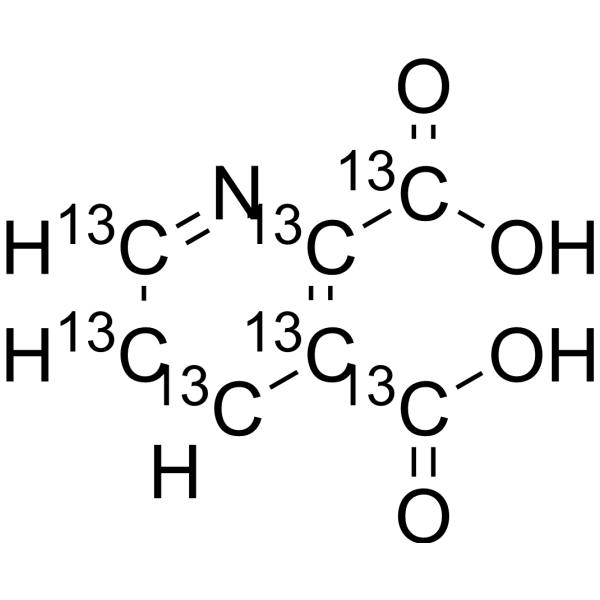 0 ImagesCat. No.: HY-100807S1CAS No.: 1346642-91-8Quinolinic acid-13C7 is the 13C labeled Quinolinic acid (HY-100807). Quinolinic acid, an endogenous metabolite of tryptophan, is a N-methyl-D-aspartate receptor (NMDA receptor) agonist. Quinolinic acid increases glutamate efflux, induces the generation of ROS, activates nitric oxide synthase, produces excessive NO, leading to calcium ion influx and neuronal apoptosis.
-
CADD522 (Standard)
 0 ImagesCat. No.: HY-107999RCAS No.: 199735-88-1CADD522 (Standard) is the analytical standard of CADD522 (HY-107999). This product is intended for research and analytical applications. CADD522 is a RUNX2-DNA binding inhibitor (downregulates RUNX2-mediated transcription of downstream target genes), with an IC50 of 10 nM. CADD522 inhibits primary tumor growth and experimental metastasis of tumor cells in the lungs of immune-compromised mice. CADD522 can be used in study of cancer.
-
Ovothiol A TFA
 0 ImagesCat. No.: HY-118720ACAS No.: 1638758-72-1Synonyms: U-23 TFAOvothiol A TFA (U-23 TFA) is an antioxidant. Ovothiol A TFA can be isolated from the tissues of marine invertebrates, algae and fish. Ovothiol A acts synergistically with glutathione to actively scavenge ROS and free radicals, and quench the triplet state of Kynurenic acid (HY-100806), thereby inhibiting oxidative stress and photodamage. OSH is expected to serve as an excellent photoprotective agent to inhibit the harmful effects caused by solar ultraviolet radiation.
-
Doxofylline (Standard)
 0 ImagesDoxofylline (Standard) is the analytical standard of Doxofylline. This product is intended for research and analytical applications. Doxofylline is an orally active PDE IV inhibitor and A1AR antagonist. Doxofylline reduces inflammation in epithelial cells via inhibiting mitochondrial ROS production and amelioration of multiple cellular pathways (NLRP3-TXNIP inflammasome activation). Doxophylline can be used in studies of asthma, chronic obstructive pulmonary disease, and bronchospasm.
-
19-epi-Scholaricine
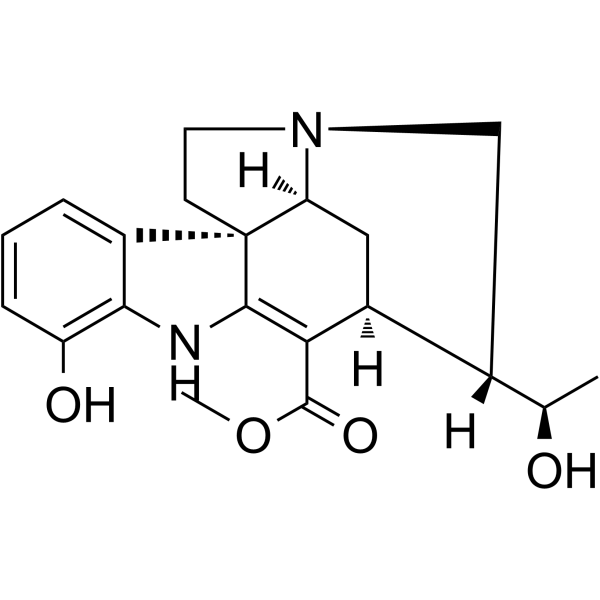 0 Images19-epi-Scholaricine is an orally active indole alkaloid. 19-epi-Scholaricine downregulates the expression of profibrotic/apoptotic proteins (HRAS, HSP90AA1, KDR) and upregulates the expression of cell cycle-related protein (CDK2). 19-epi-Scholaricine suppresses ROS production and reduces the release of inflammatory mediators, thereby attenuating podocyte apoptosis, renal inflammation and oxidative stress by inhibiting AKT/mTOR. 19-epi-Scholaricine can be used in the research of chronic glomerulonephritis and membranous nephropathy.




